
Biceps tendinopathy & SLAP tear
What is Biceps tendinopathy & SLAP tear?
Biceps tendinopathy is irritation or degeneration of the long head of the biceps tendon as it passes through the front of the shoulder. A SLAP tear involves the superior labrum, the cartilage rim where the biceps tendon attaches inside the shoulder joint. These problems often overlap and can be associated with rotator cuff disease, instability, overhead sport, gym loading or age-related tendon change.
Common symptoms
Patients often describe deep anterior shoulder pain, pain with lifting or overhead activity, clicking, catching, pain during throwing or pressing movements, and discomfort that can radiate down the front of the arm. Symptoms may be subtle at rest but become very obvious with load.
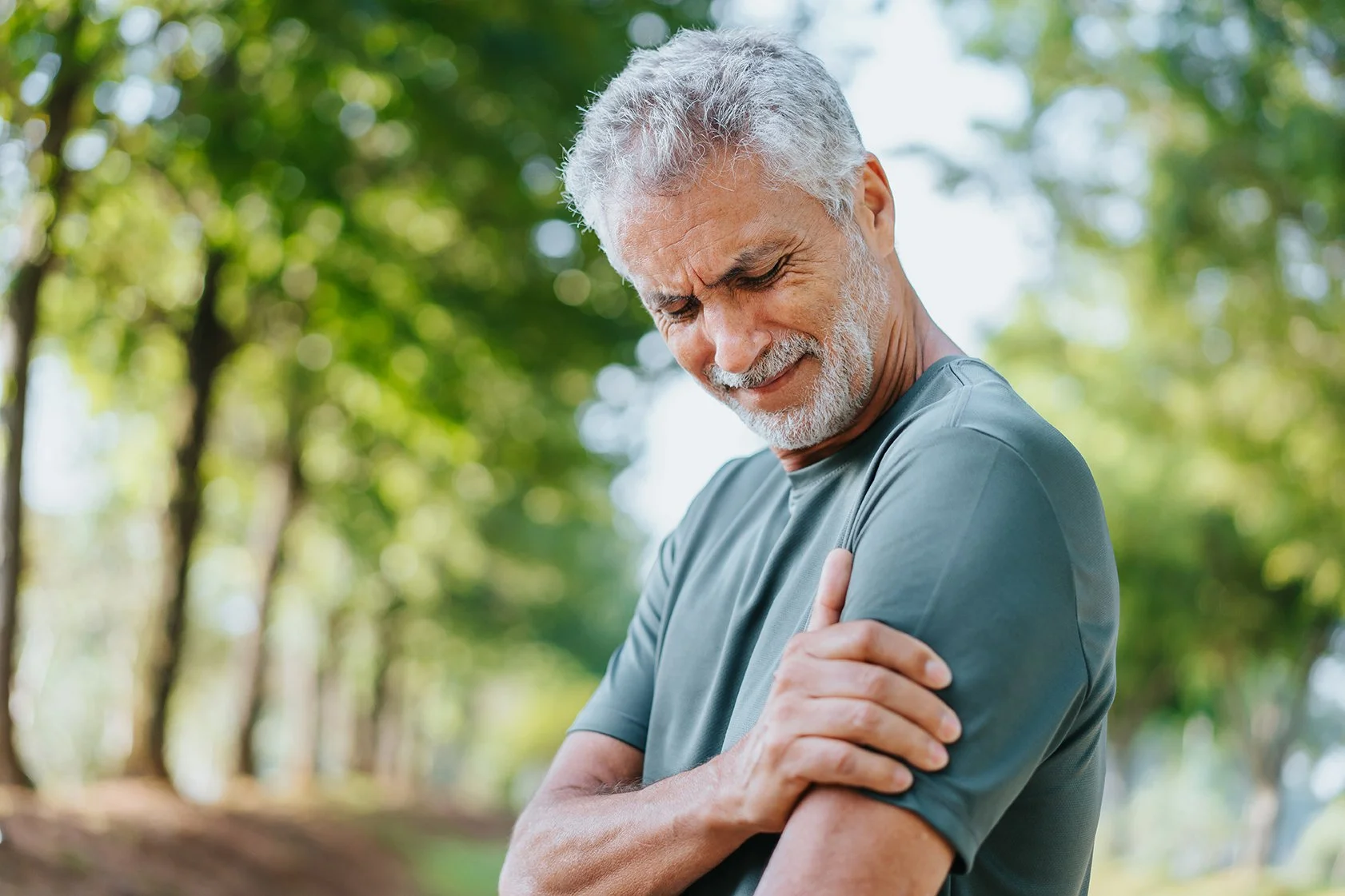
Shoulder pain
Diagnosis and imaging
Assessment includes shoulder examination, biceps and labral provocation tests, and careful evaluation of the rotator cuff and shoulder stability. X-rays help exclude arthritis or bony pathology. Ultrasound can assess the biceps groove and rotator cuff, while MRI or MR arthrogram may be used when a labral tear, anchor injury or associated intra-articular pathology is suspected.
Non-surgical treatment
Treatment usually begins with load modification, physiotherapy focused on scapular control and rotator cuff strength, anti-inflammatory strategies and careful return to activity. Image-guided injections can be useful when pain is blocking rehabilitation or when the diagnosis needs confirmation.
Surgical treatment
Surgery is considered when pain, mechanical symptoms or weakness persist despite appropriate treatment. Options include arthroscopic assessment, biceps tenodesis, biceps tenotomy, labral debridement or SLAP repair in carefully selected younger overhead athletes. The aim is to treat the true pain generator while preserving shoulder strength and function.
Recovery and follow-up
Recovery depends on the procedure. After biceps tenodesis or SLAP repair, the tendon or labrum is protected early, then range of motion and strengthening are progressed in stages. Return to heavier gym loading and overhead sport is commonly measured in months rather than weeks.
Biceps tendinopathy & SLAP tear FAQs
What is the difference between biceps tendinopathy and a SLAP tear?
Biceps tendinopathy affects the tendon itself, usually at the front of the shoulder. A SLAP tear affects the labral attachment of the biceps deeper inside the joint. They can occur together, which is why the whole shoulder needs to be assessed.
How is biceps tendinopathy & slap tear diagnosed?
Diagnosis starts with a focused history and examination, then uses imaging selectively to confirm the pattern of injury, exclude related problems and plan treatment accurately.
Is a SLAP tear always repaired?
No. SLAP repair is best reserved for selected patients, especially younger athletes with a clear traumatic or overhead-sport pattern. In many adults, biceps tenodesis is more predictable than repairing a degenerative labral tear.
Will I need surgery for biceps tendinopathy & slap tear?
Many patients improve without surgery. Surgery is considered when symptoms remain limiting despite appropriate non-surgical care, when there is significant structural damage, or when delay may compromise function.
When can I return to gym training and overhead sport?
Return depends on the diagnosis, treatment type, tissue healing and the physical demands of the activity. The plan is usually staged, with strength, range of motion and confidence rebuilt before unrestricted loading.

Reconstructive Orthopaedics Melbourne (ROM)
ROM's purpose is to restore mobility, reduce pain, and improve lives — through reconstructive orthopaedic surgery grounded in science, and through research that redefines what’s possible in musculoskeletal surgery.